Many rural Vermont schools are facing a growing tech skills crisis.
Budget cuts and systemic underinvestment have led to reductions in Science, Technology, Engineering, Arts, and Mathematics (STEAM) education—limiting access to computers and eliminating key programming altogether.
The decline has been exacerbated by the recent exodus of experienced teachers who once championed these subjects.
In Toolin et al. (2021), it is reported that just 27 out of approximately 8,000 Vermont K–12 teachers hold a computer science endorsement. By 2024, that number had fallen further.
As a result, many rural communities are being left behind by the rapidly evolving, tech-driven world.
Last school year, around 500 students—and an additional 123 this summer—benefited from a rising force in STEAM education with ambitious plans to help close the gap, both in STEAM education and tech literacy.
The Black River Innovation Campus (BRIC), a nonprofit in Springfield, VT, has created a variety of STEAM programming and professional development focusing on bringing tech-enabled STEAM experiences to students, classrooms and educators. These programs not only try to improve students’ and teachers’ access to cutting-edge tech, but to increase engagement and creativity in the learning process.
“We have found that student participation and motivation improve dramatically when interacting with our programming.” said Ben McVety, Director of STEAM Programming. “You know a lesson is engaging when students start asking how they can add things to their assignment. We love tools that encourage that type of inquiry learning.”
Appleton et. al (2008) would agree, showing in research that strong student engagement correlates with improved achievement and behavior outcomes in the classroom.
According to a report by the computer science advocacy group Code.org, 75% of rural public high schools in Vermont offered computer science courses during the 2021–2022 school year. In contrast, 100% of suburban and urban counterparts were able to offer at least one computer science course—highlighting a significant disparity in access to tech education across the state.
This shortage is felt most acutely in rural schools, where students often have less access to digital tools in the classroom and at home.
“A lot of our programming focuses on career pathways into STEAM—with an emphasis on building skill sets that support industry 5.0 ideals,” he continued.
Industry 5.0 refers to emerging trends that blend technological skills in automation and artificial intelligence with human expertise in growing economies.
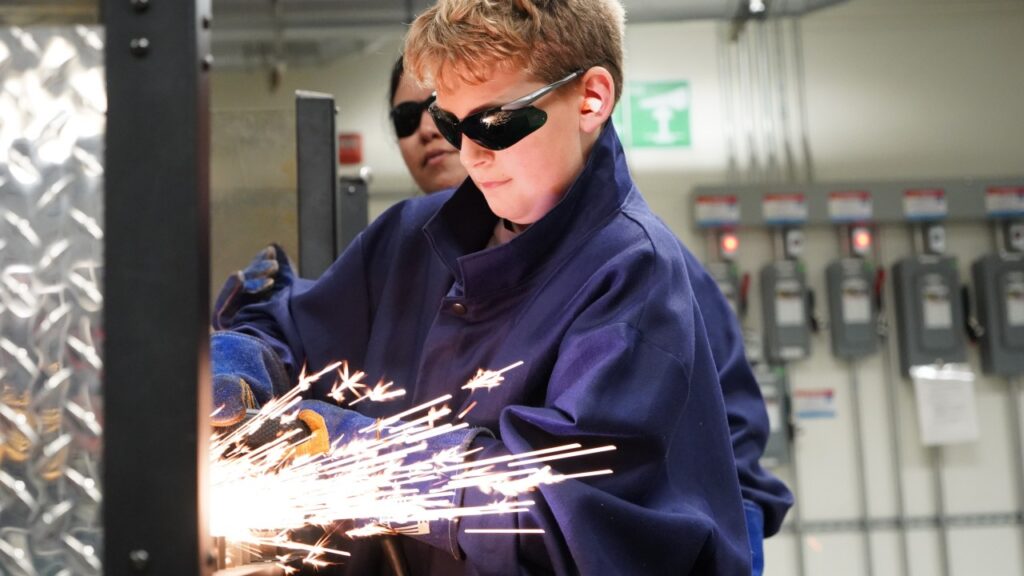
To build a strong foundation, BRIC’s summer camps include the basics: operating a mouse, keyboard shortcuts, and typing—skills that are harder to find now that tablets have largely replaced desktops in the home environment.
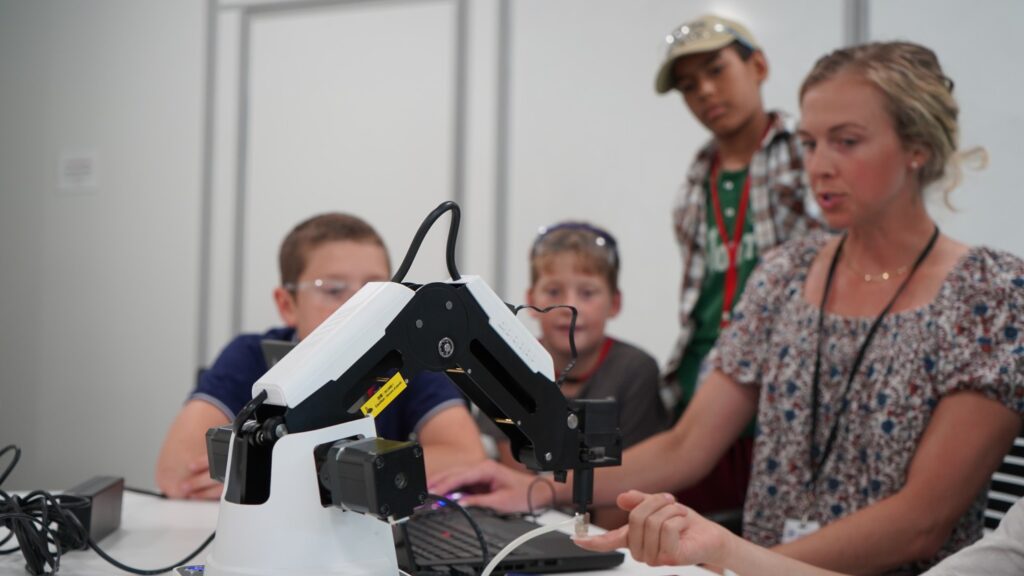
Once they’ve mastered the basics, students dive into project-based design and scientific inquiry tied to a curriculum built on gamified objectives to make learning fun. The programming is highly engaging, and students are generally excited to use any form of technology in a classroom setting. Learning quickly becomes inquiry-based, further increasing student buy-in.
“Students love figuring things out and sharing their findings with their peers,” says Ben, “and once they are on a roll, they’re eager to share what they’ve learned.”
This project-based teaching style allows students to be mentors to each other, improving their communication and collaboration skills and preparing them for future careers, in which peer-to-peer collaboration is an essential skill.
Since last summer, BRIC has doubled the number of camps offered—and plans to do so again next year.
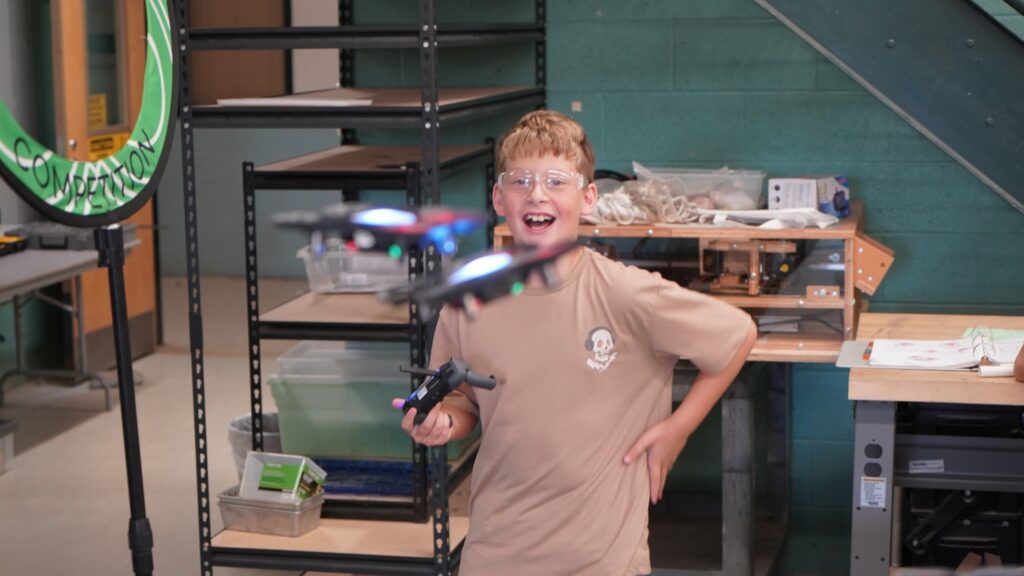
This year’s activities included laser-cutting DIY projects, Drone Soccer (5v5 teams trying to score on a floating goal), Video Game design, programming for Virtual Reality, theater, and projects involving LEGO and circuit boards.
During the school year, BRIC continues to support learning through a lending library model, offering tools, curriculum, and expert guidance to partner schools. Paired with professional development for educators, this approach helps fill critical gaps in STEAM instruction across the region.
With their main site still under construction, BRIC has ambitious plans to expand—transforming the facility into a full-fledged makerspace, STEAM workshop hub, and even a virtual reality escape room designed for family fun and a collaborative team-building experience for businesses.
Ben’s enthusiasm is clear: “We’re working to roll out as much of this as possible, in as many areas as possible, to fill the void in STEAM programming—especially when it comes to tech.”
Whether you’re an educator, parent, or community partner, BRIC is building a future where all Vermont students have access to the tools and skills they need to thrive.
Visit https://www.bricvt.org to learn more.


