
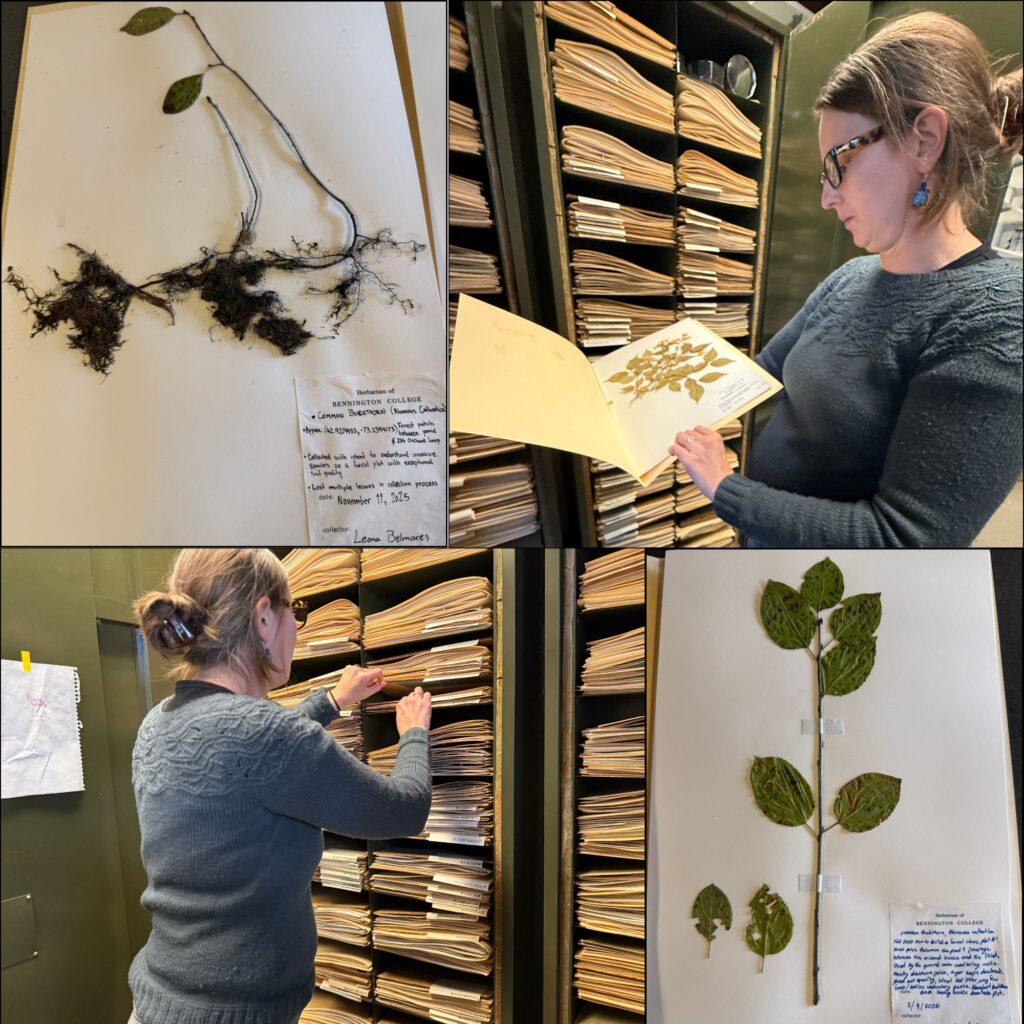
An herbarium is a “systematically arranged collection of dried plants”—a database of flora specimens preserved through various methods. Historically, building these collections meant strenuous hikes through vegetative growth, whether that be muddy swamps, thick understory, or dense prairie.
From there, a specimen must not only be extracted intact, but also transported back to be pressed, dried, and preserved for generations of scientists to come.
Countless herbariums have been preserved across institutions, museums, and personal collections, each varying in size, specimens, and cataloging procedures. Just as the delicate leaves and flowers capture an organism in time, many of the smaller collections—often labors of love with more personal attention to care—are beginning to be lost to time.
Recognizing this, botanist Caitlin McDonough MacKenzie sought funding through the NSF STRIVE STaRS Award to preserve one small herbarium as a tool for climate change research for her students at Bennington College in southern Vermont.
Her project digitized and thus permanently preserved a small but high-quality collection previously held by Marlboro College, which permanently closed its doors at the end of the 2019–2020 academic year.
As students examined, cataloged, and photographed the collection, the specimens were added to the North American Network of Small Herbaria dataset, opening these invaluable specimens to the public while instilling in students the value of preserving the past.
“Small herbariums fill in a lot of gaps and lead to more round data sets,” said Hazel Ragozzine, a Bennington College student. “Without all of these little herbariums, we would just have these large herbariums, and they tend to not keep every single specimen.”
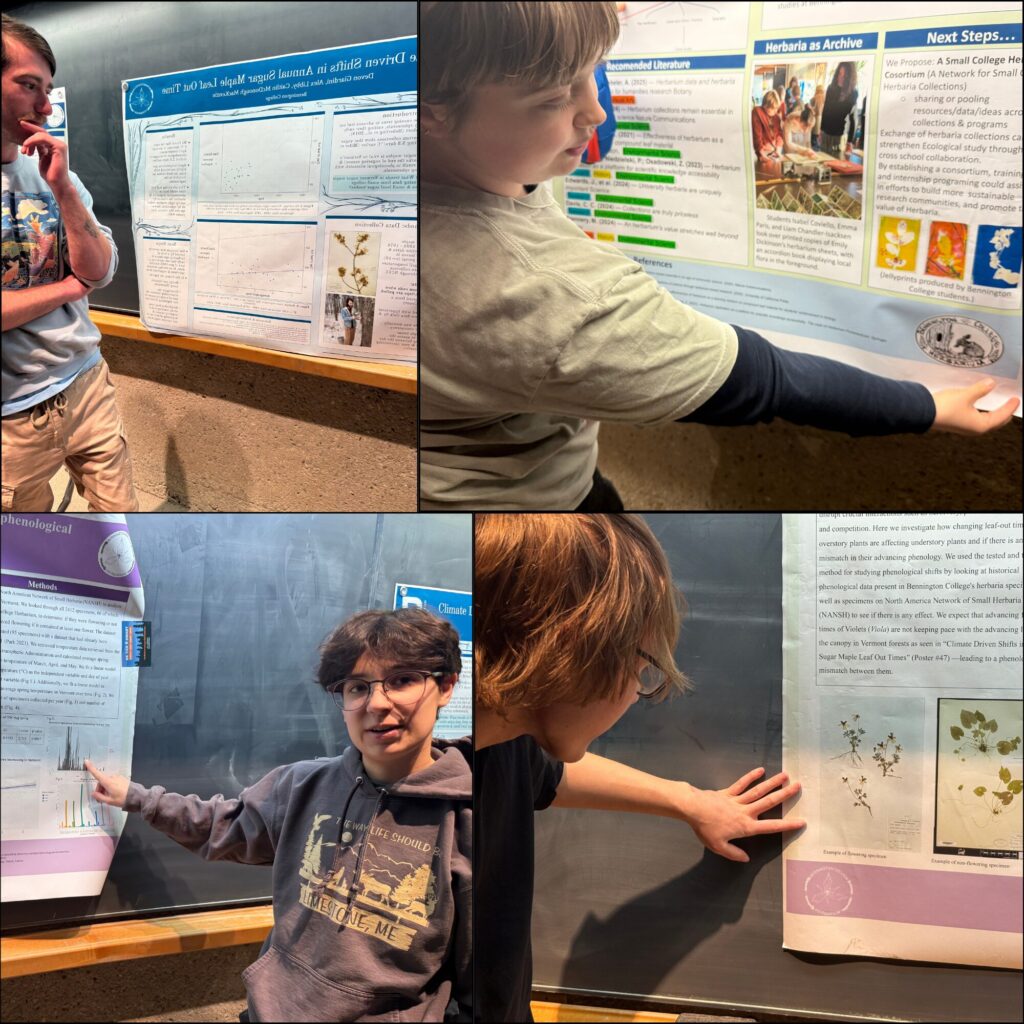
Demonstrating how small herbarium collections supported their research, Hazel and her research partner, Kai Bjork, shared findings they presented at the Northeast Natural History Conference in Burlington, Vermont this past April.
Reflecting on their research into the threat that variability in overstory leaf-out timing poses to understory plants as a result of climate change, Kai shared insight into the role of small herbaria.
“There’s a lot of cool stuff with small herbaria and their ability to make scientific discoveries more robust and more representative of the actual reality of vegetative life,” Kai said.
In addition to the specimens they preserve, smaller herbaria often serve as platforms for emerging researchers to make meaningful contributions to science—a vehicle for new voices to leave their mark on the archives of natural history.
Much like science itself, the value of an herbarium often lies in its attention to detail. Careful collection, preservation, and documentation can make the difference between a finding grounded in evidence and one built on assumption. Through their work with the collection, Caitlin’s students experienced firsthand the patience and precision that scientific inquiry demands—skills they will carry with them throughout their careers.
“I think it’s really important to keep working with small herbaria because they had some of the best specimens, in my opinion, and the most care,” said Hazel, looking at a photograph of a delicate violet carefully arranged on a sheet, its petals and roots still remarkably vibrant.
Story and photos by Devan Monette, NSF STRIVE