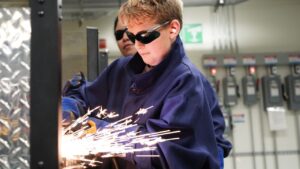
What if looking out the window was part of the lesson?
As with all research, learning starts with an observation. For Jeremy Vanderkern, Design Teacher at Fair Haven Union Middleschool, a student’s attention drifting to look out the classroom window offers an opportunity—one that turns a potential distraction, a songbird, into the focus of a hands-on project.
Inspired by some of his most memorable classes as a student, Jeremy can relate to students who need hands-on assignments to feel engaged.
“Schools aren’t necessarily designed for that kid. They’re not designed for the kid who needs to move around and get their hands dirty,” Jeremy said, reflecting on how he structured his 2026 STEAD award project Nest Quest: Students Building for Vermont Birds.
Jeremy went on to share his broader teaching philosophy: “Letting them have that time to explore, fail forward, try again, iterate. They need that because that’s reality.”
This same philosophy carries over into when it’s time to assess the students learning. “You don’t get graded based on how successful it was. You get graded based on the iterations, the testing, and discovering why didn’t it work. That’s a mindset of resilience.”
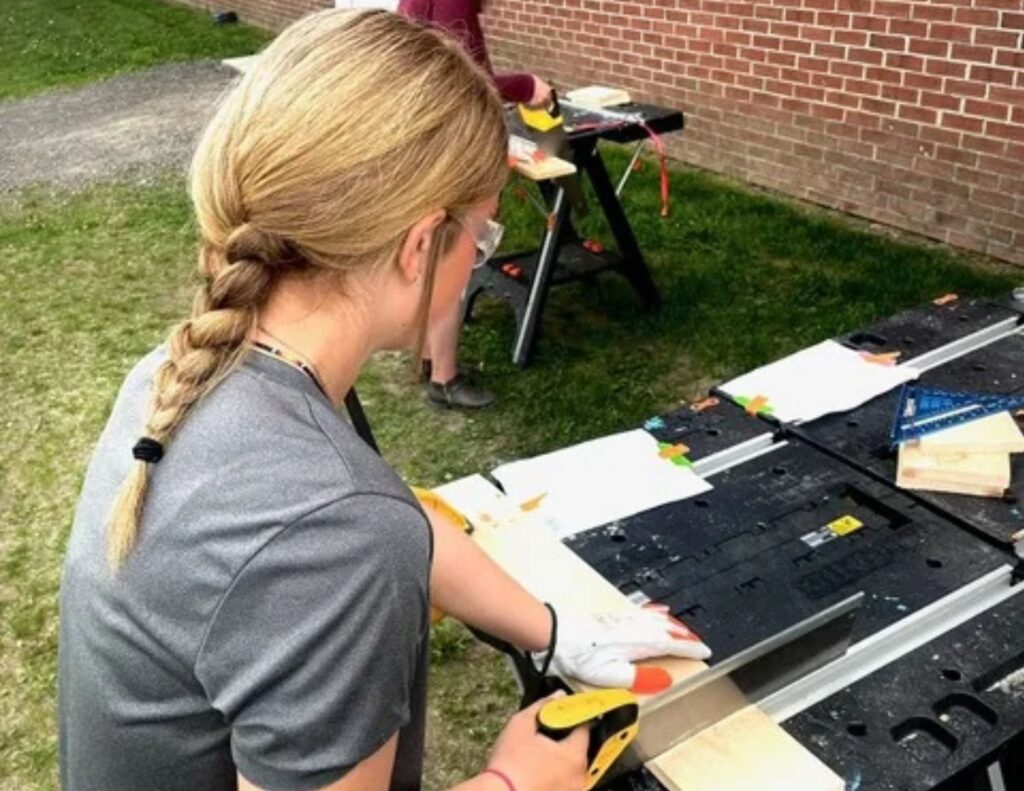
With that mindset, students set out to bring their project to life. After observing several types of birds around the schoolyard, they needed to learn more before formulating their ultimate research question: How can we help nature?
The students learned everything they could about local birds, in part by working through a curriculum developed by Jeremy. From practicing bird-call recognition with the Cornell Lab’s Bird Song Hero game to learning how light pollution affects migratory birds, they built the knowledge needed to refine their question: What is the best birdhouse design to support nesting birds in Fair Haven, VT?
Next, the students considered the components of a traditional pine birdhouse and thought critically about which design features might make the shelter more effective.
“We had a huge conversation on just the perch,” Jeremy recalled. He steered the students toward Vermont Audubon, which ultimately led them to question this familiar feature. “Do [birds] even need that? What would use it? Maybe predators use it.”
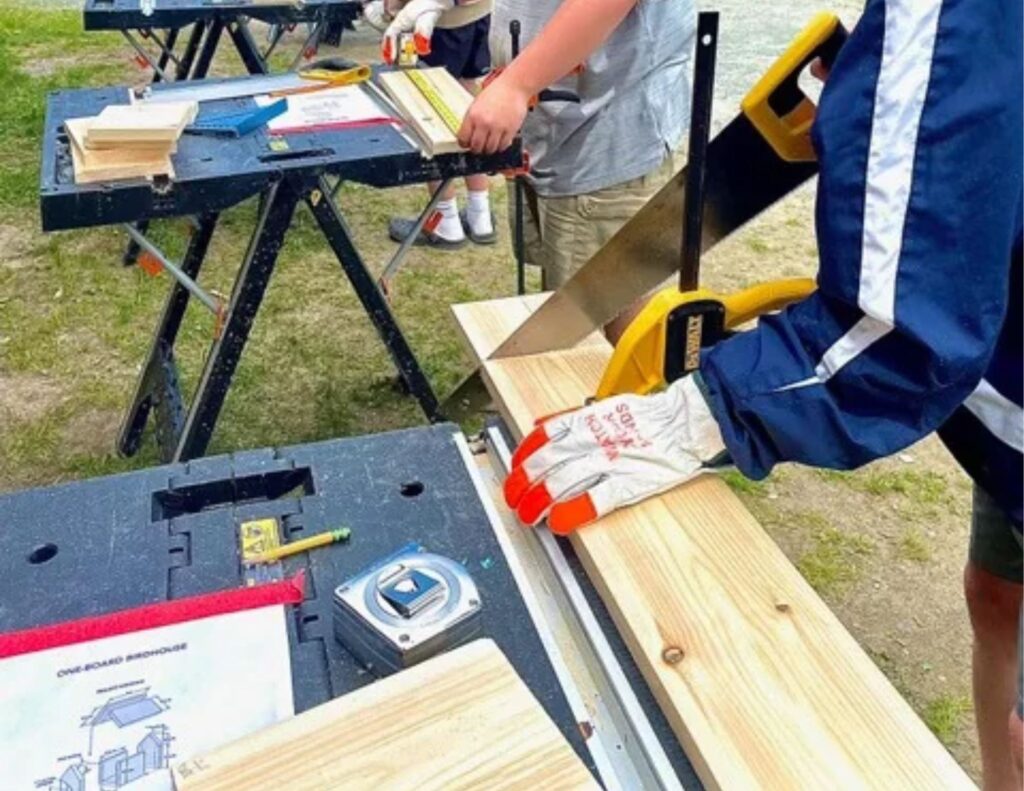
These questions arose with every aspect of the design, ultimately leading students in different directions as they developed and tested their ideas.
Testing introduces another layer of learning. Students will learn how to equip, program, and analyze data from smart sensors installed on their nest boxes. Once weatherproof smart components are in place, they can begin asking questions that will inform future iterations of their designs.
“Are some birdhouses getting more hits than others? Does temperature play a factor?”
Ultimately, the results will be mixed.
Some birdhouses might work as intended—a cozy shelter for a titmouse, chickadee, or maybe even a bluebird to nest in.
But, as with any research, there will also be failures.
Maybe the hole was too small or too low. Maybe a perch wasn’t a good idea after all.
“It’s okay for it to fail. And that’s a really hard lesson,” Jeremy reflected, recalling his own time as a student and the classes that taught him through trial and error.
Ultimately, it’s the lessons we learn through failure that stick with us long after an assignment ends. In a world of infinite possibilities, knowing what not to do can be just as valuable as knowing what works. Through their research, the students at Fair Haven Middle School will gain a little more clarity about where to go next.
“I don’t remember every video game I ever played, and I don’t remember all the worksheets I did. But I do remember those classes, and those are the things that I apply now in my life.”