In school, getting your hands dirty is usually something reserved for recess. But for students who attended one of two Climate Resilience & Food Systems Community Showcases this year, getting their hands dirty was all part of the learning.
These events provided not only a chance for students to demonstrate their knowledge, but to be part of a bigger community of learning. By bringing together more than 10 elementary schools for two community Farm to Table celebrations, students could learn from other students and become inspired to carry their learning forward into the next year.
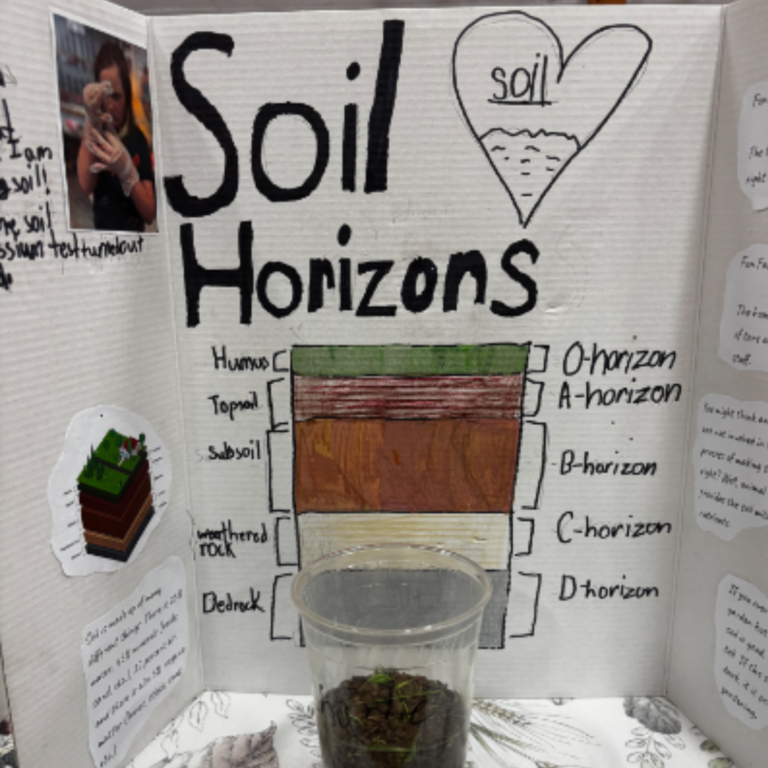
Utilizing a curriculum built by the Vermont Farm and Forest School in Roxbury, VT, students engaged in topics exploring soil science and carbon cycling to establish a foundation for understanding the role our changing climate has in local food systems.
From there, students designed experiments and conducted field observations to incorporate these concepts into project-based learning.
Whether building their own experiment in the classroom, taking their observations to the school garden, or learning from local farmers on field trips, students had an opportunity to take science beyond a concept and make it tangible.
Misse Alexrod, founder and program director at Vermont Farm and Forest School, reflected on the excitement in the room when it came time for students to show their work: “You could just hear the buzz in the auditorium. Everyone was grabbing people’s hands and being like, come over here to this table, come check this out.”
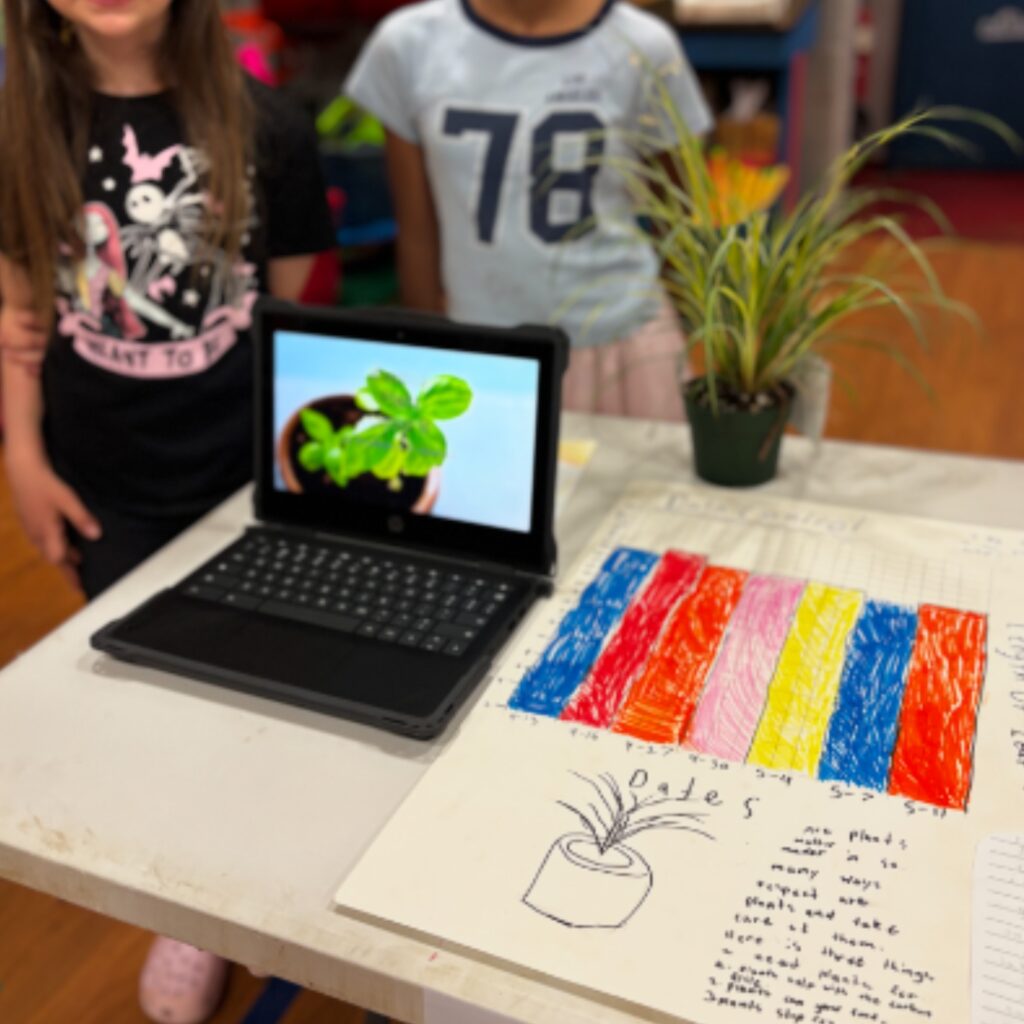
Tables were lined with poster displays and hand-bound books, while walls were alight with colorful slide decks, all demonstrating students’ understanding through interdisciplinary culminating projects.
“Some of them had computer slide shows of pictures of them measuring, collecting data, creating graphs of different demonstrations that they did. So it was a real big variety,” said Misse.
To bring together this event and learning opportunity, countless hours went into everything from curriculum design and lesson planning to meal planning and community coordination. But at the end of the day, the resounding hum of student enjoyment nourished those involved just as much as the farm to plate meal they shared together.
Experiences like these demonstrate how Vermonters are making unique strides to integrate science and exploratory learning into students’ education through innovation, community connections, and external support from state partners and STEM initiatives.
Though Misse’s work was in part funded by a STRIVE STEAD award, many opportunities for such funding exist through foundations, state agencies and network partners, and federal funding.
In reflecting on why grant seeking is integral to her work, Misse said, “Budgets are really small. There’s not a ton of resources for being able to connect to project-based learning. Grants provide the feasibility to connect a curriculum to a sense of place.”
With the funding awarded to her project, Misse brought that vision to life by, in her own words, “creating a space for hands-on experimenting for kids, to bring the learning full circle and give them a real-life connection to help them think about the different ways that they can then bring science into their future learning.”
To learn more about how you can apply for STEAD funding, visit strivevt.org/grants or reach out to admin@strivevt.org.
If you would like to utilize the curriculum created by the Vermont Farm and Forest School, this link will direct you to their resources page.
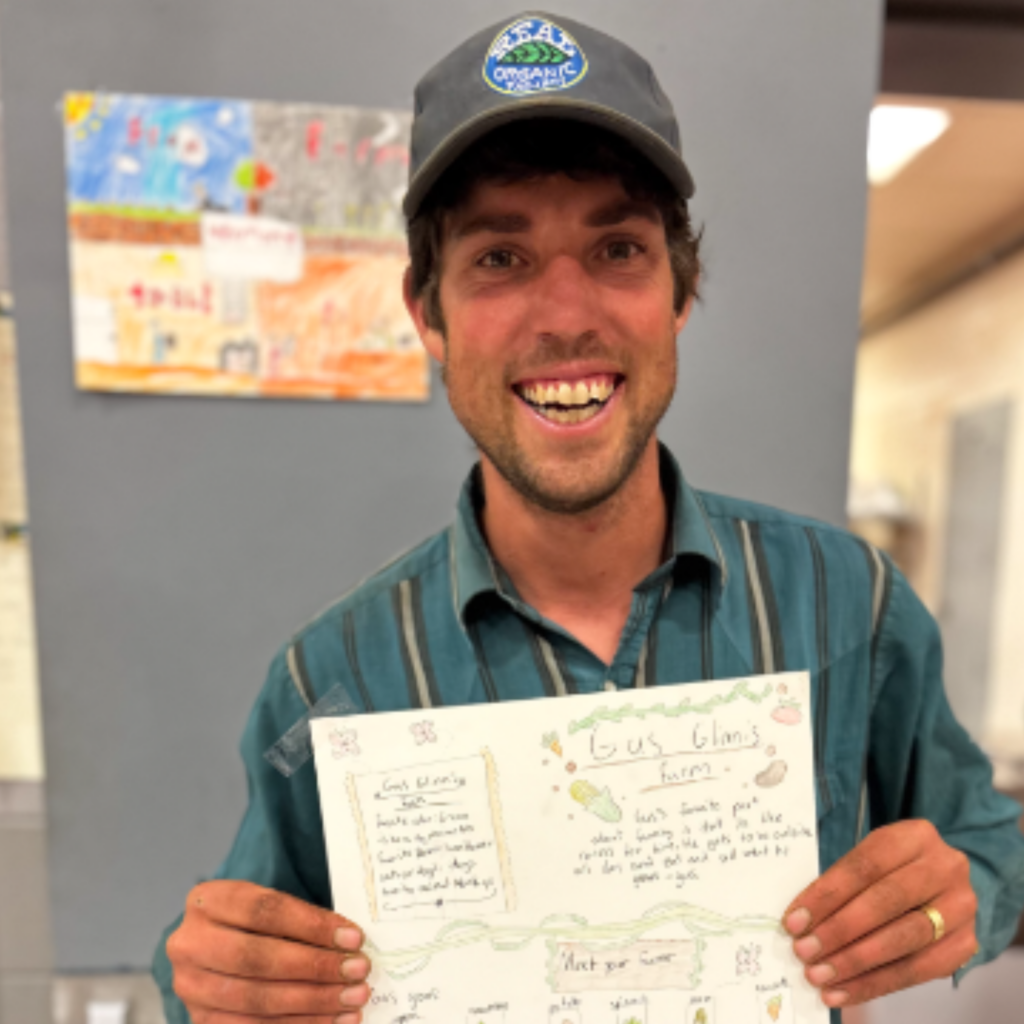
Gus Griffin holds up poster created by student who visited Glinnis Hill Farm where he farms with his partner in Northfield Vermont.