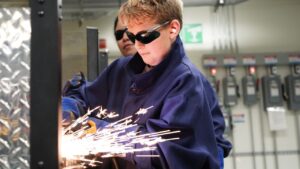
While most summer camps hand out sunscreen, RVTC’s STEM Robotics Camp hands out safety glasses — and a crash course in real-world engineering.
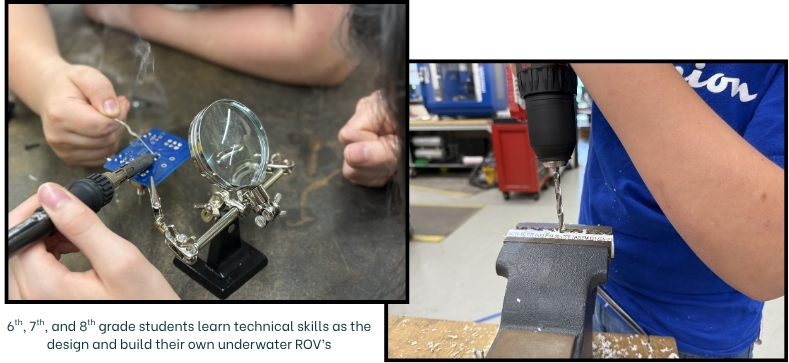
In just one week, 15 co-ed students work in teams to build functioning underwater remotely operated vehicles (ROV’s).
Despite the laid-back atmosphere — classic rock playing as students spread out across workbenches laden with soldering stations, wire cutters, and partially assembled ROV skeletons — the students are taking their work seriously.
After all, the work they’re doing might be the spark that lights the path to a future career. But that doesn’t mean they can’t have fun in the process.
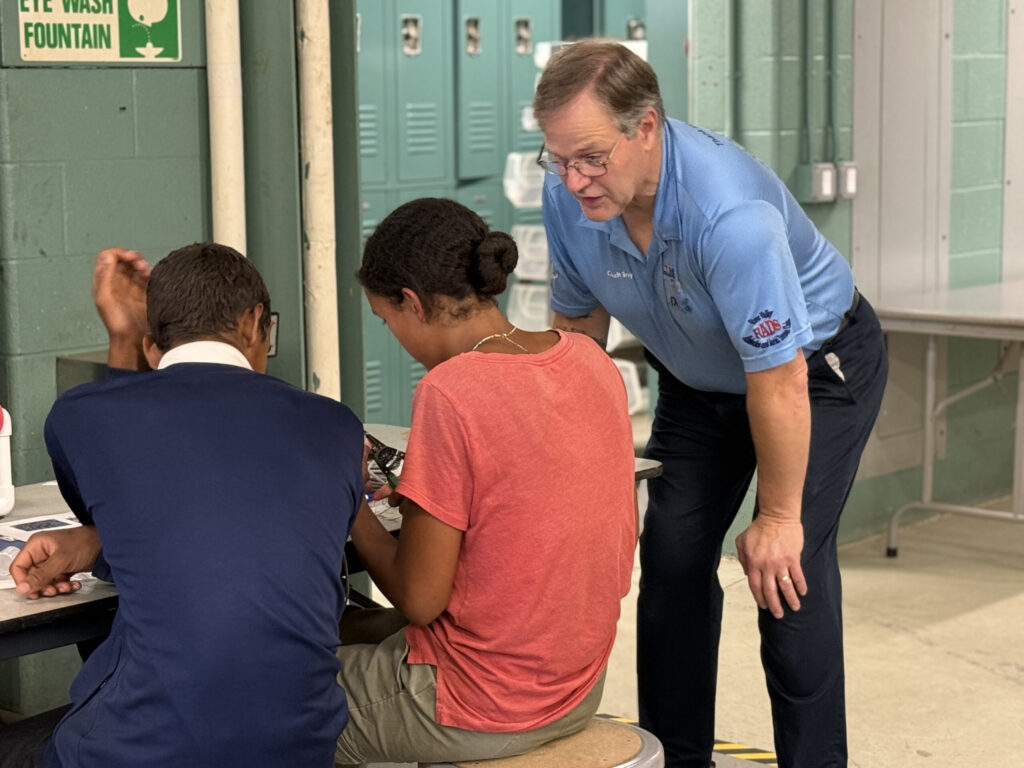
Their instructor, Christopher Gray, reflects on the day’s progress before the class departs.
“Honestly, I’m totally impressed! Given the level of difficulty, you all got further in 3 hours than some adults would in a day!”
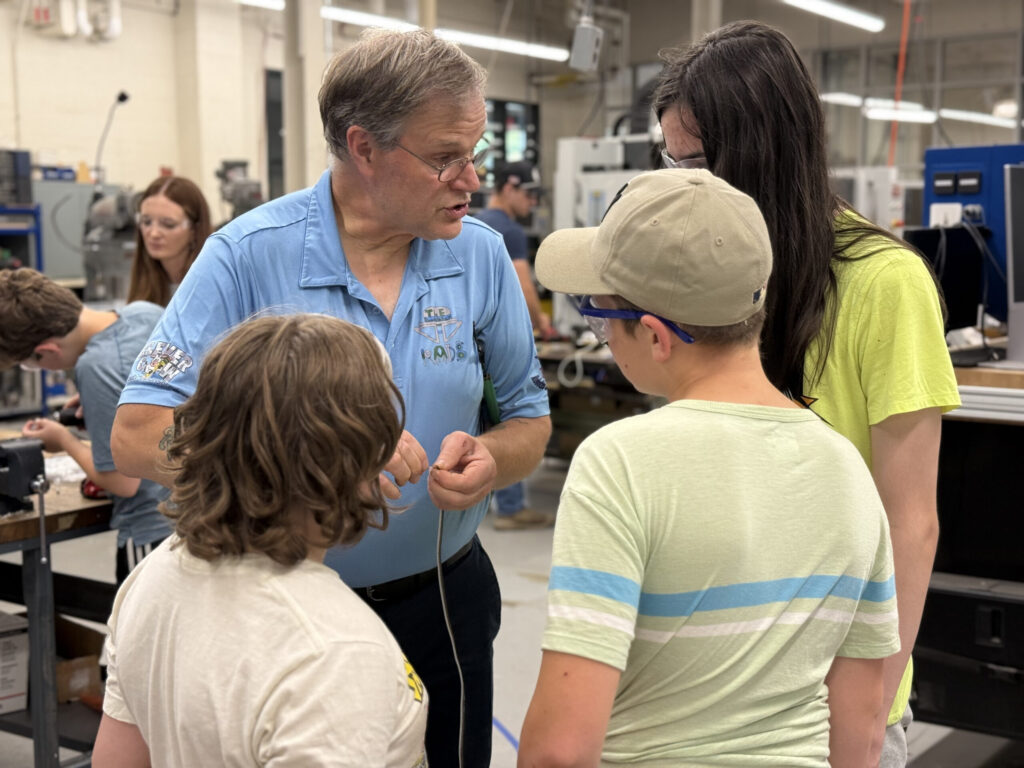
Robotics’ Camp Students in July, 2025
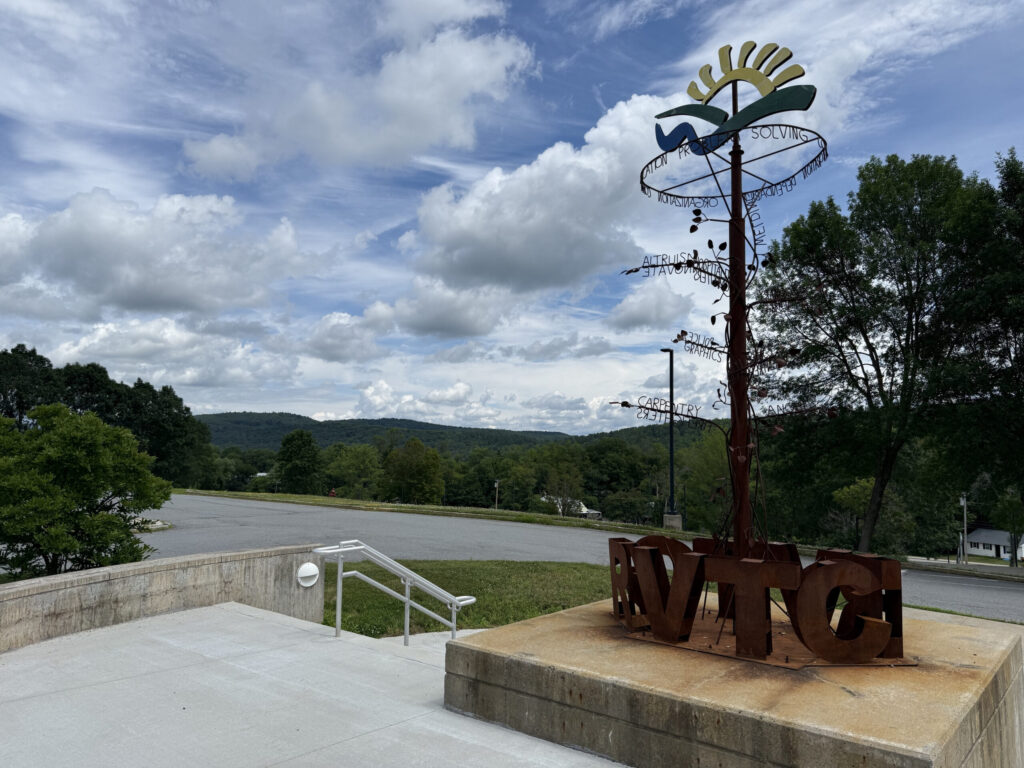
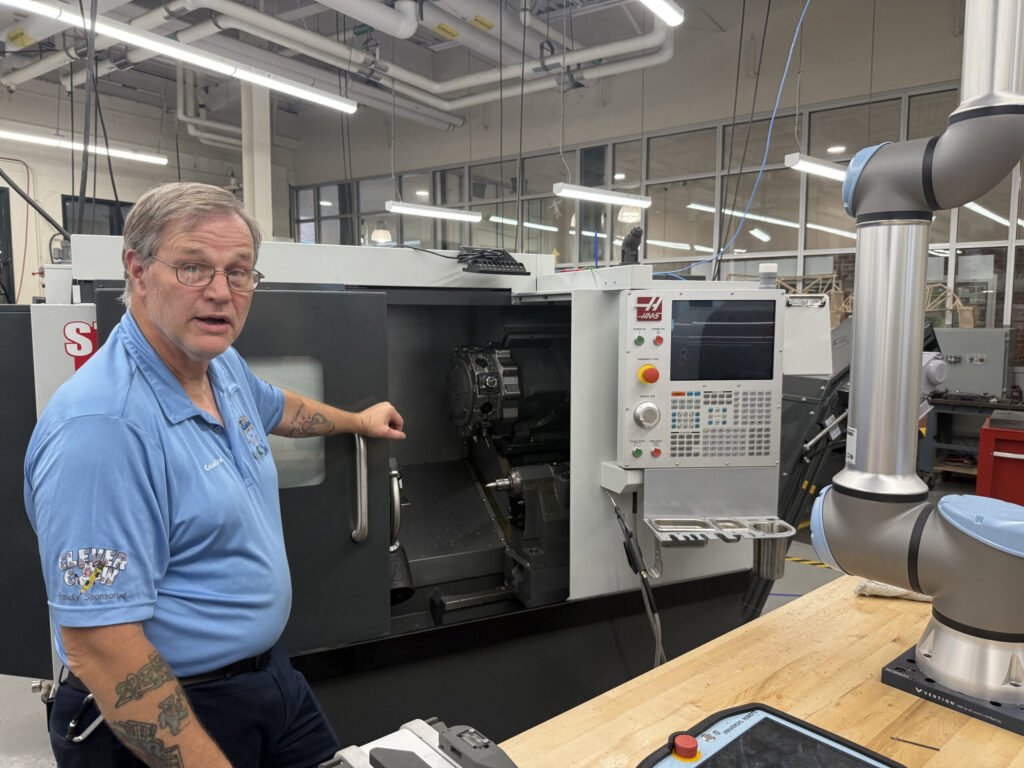
Beneath banners honoring the Roboticsand Aerial Drone Club (RAD)’s recentachievements at the national DroneChampionship, Chris remains humble inhis role — despite being the AdvancedManufacturing and Engineering Instructorat RVTC since 1991.
In that time, Chris has amassed a wealthof experience in the needs of STEMeducation in Vermont and has devoted hislife to teaching and improving access toprogramming while ensuring his studentshave the skills and credentials to startpromising careers after they leave hisclass.
Before I became a teacher, I was a toolmaker. And the reason I’ve been doing this for so long is to help create a career pipeline,” Chris reflected. “That pipeline is almost nonexistent in the country — let alone in this part of Vermont.”
And now the need is more urgent than ever.
According to Vermont Talent Pipeline Management, the demand for new manufacturing workers — those hired into newly created positions — has grown significantly. In 2018, these hires made up 33% of total hiring demand; by 2021, that number had jumped to 46%. That 13% increase shows employers across the state are creating more jobs than ever, but they’re struggling to fill them — leaving hundreds of positions open.
Referencing a state apprenticeship program through Vermont Technical College (now part of Vermont State University) that works to integrate students at G.S. Precision, Chris noted that while they were able to take 16 students every six months, it only scratches the surface of the statewide need.
“These students need to have something to go to afterwards — and that may or may not be college,” said Chris.
Throughout his career, Chris has turned advocacy into action — developing programs that meet
real student needs. From adult certificate programs to addressing the lack of prerequisite math
courses, and most notably, the ongoing challenge of securing dual enrollment credit, his focus
has remained on creating meaningful pathways forward.
“High school students do as much work — or more — than college kids in technical programs,
and they should be awarded college credit for it.”
Yet as Chris continues his tireless, behindthe- scenes work—advocating for greater cohesion across Vermont’s STEM ecosystem —his motivation remains clear:
To create pathways for all students to experience the same curiosity, discovery, and satisfaction his Robotics Camp students feel as they build their ROVs.
Programs like this open the door to STEM education, giving students the chance to build real-world skills that can lead to high-paying, rewarding careers. Educators like Chris are helping to strengthen Vermont’s STEM landscape—ensuring that
rural communities can thrive through innovation, opportunity, and a renewed sense of purpose.
Story and photos by Devan Monette, STRIVE
RVTC is helping students turn curiosity into career readiness. Explore their full range of programs at rvtc.org.